The Pros and Cons of Dental Implants vs Veneers: Which Option is Right for You?
There are several things to consider when comparing dental implants vs veneers. Utilize this resource to identify the right option for you.
There is one type of bone in the human body that does not heal itself: the teeth. While teeth are resilient in their own right, when they become damaged or neglected, medical intervention is almost always needed.
Fillings and crowns are the most common types of dental treatments, but they're reserved for cavities, minor cracks, or slightly worn-down teeth. Dental implants and veneers are for tooth loss or more serious conditions. These are two distinct procedures that are each useful in different circumstances.
This article lays out the pros and cons of dental implants vs veneers. It explains how they work and what situations are most appropriate for each. Keep reading to learn which one might be right for you.
What Are Dental Implants?
Dental implants are structures that replace missing teeth. They consist of an artificial root made of strong materials, such as titanium or zirconium oxide, that holds a custom-made dental crown. The crown is anchored to the synthetic root with an abutment.
There are two main types of dental implants: endosteal and subperiosteal. Endosteal implants are the most common. They are embedded in the jawbone and can support several artificial crowns.
Subperiosteal implants are metal frames that sit on top of the jawbone, just below the gumline. These are usually reserved for situations where the patient has inadequate bone height to support endosteal implants.
Regardless of the type, dental implants look and function like real teeth. They can restore the ability to chew and the cosmetic appearance of the patient's teeth.
What Are Veneers?
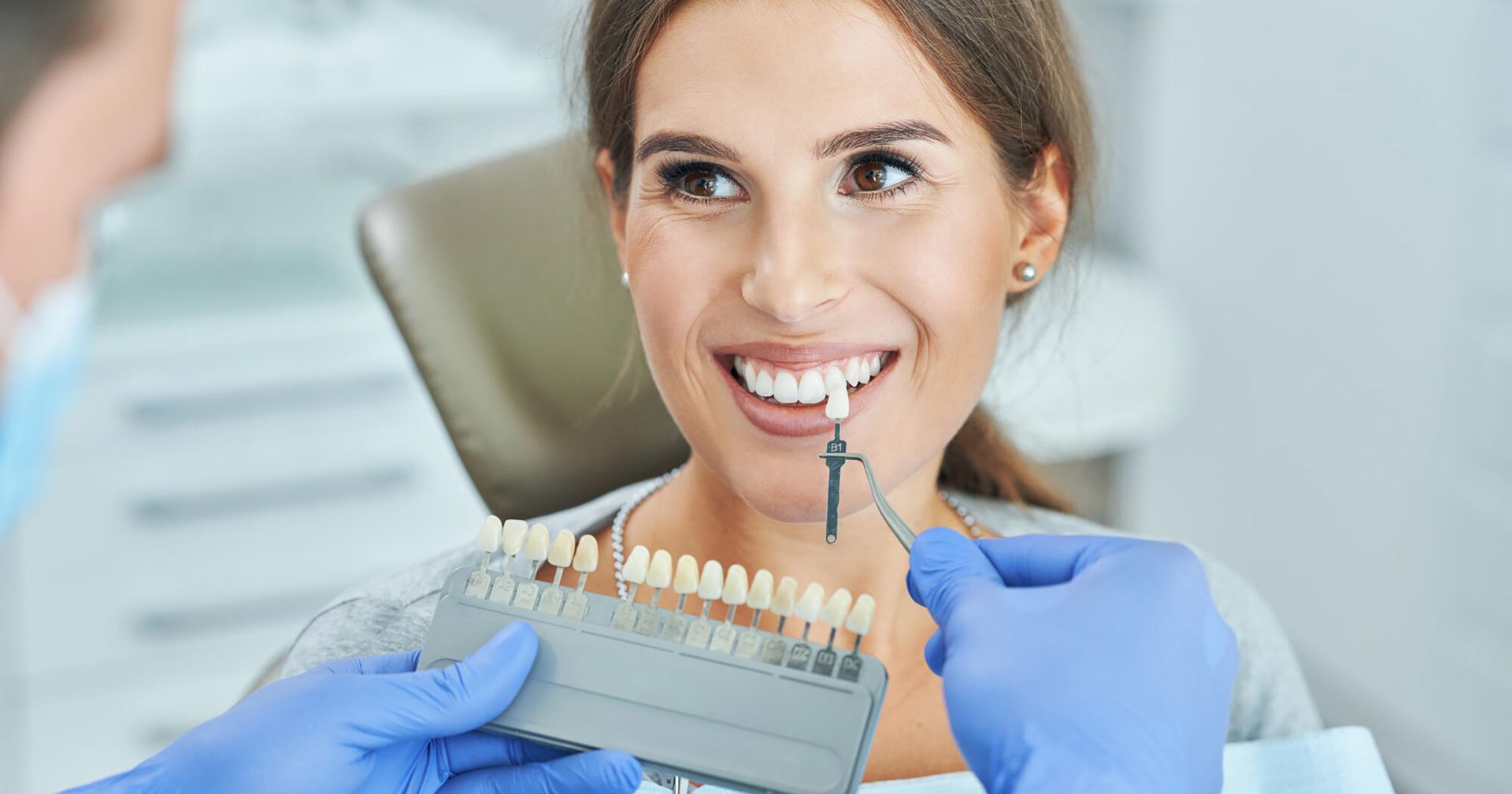
Dental veneers are very thin, custom-made shells that cover the front surface of existing teeth. They bond to the teeth to create a uniform aesthetic, mimicking the color and shape of the patient's real teeth.
Dental veneers were invented in 1928 by Dr. Charles Pincus, an American dentist. Originally, they were moveable, with the intent to temporarily improve Hollywood actors' smiles during filming.
There are many different types of veneers today. They are usually made from composite materials, such as resin, but porcelain veneers are the most common.
Dental Implants vs. Veneers
Both implants and veneers are types of permanent artificial teeth that can be a part of effective dental restoration. However, there are pros and cons to each. Here are the main considerations to make when choosing between dental implants vs veneers.
Applications
Dental implants are designed for situations where teeth are missing or are in such bad condition that they need to be removed and replaced. Veneers are for cosmetic corrections (although they do have some functional value). These include situations where a tooth or partial tooth is discolored, damaged, or misaligned.
One downside to veneers is that, once they're put in, you cannot revert to the original tooth. For this reason, you can only replace them with other veneers.
Procedure
Based on earlier descriptions, you may have guessed that dental implants demand a much more complex and invasive surgical procedure than veneers. This requires the use of anesthetic, and there is a longer recovery time. Depending on the number of teeth that need replacing, the entire restorative process can take many months (or longer) to complete.
Veneers are much easier to put in, although they do require a tooth or partial tooth to which they can adhere. The dentist will remove a very thin layer of enamel before bonding the veneer to the existing tooth.
Unlike crowns, veneers need very little shaping or adjustments. The procedure can be completed in a day and recovery time is minimal. In some cases, patients report minor teeth sensitivity, which is almost always temporary.
Appearance
Both implants and veneers will improve the appearance of your smile. However, veneers have the edge when it comes to matching more closely with existing teeth. Also, veneers are stain-resistant, which makes them hold up well against coffee, wine, and even tobacco products.
Implants, on the other hand, are geared more toward function than they are appearance. However, in situations where the tooth is completely missing, dental implants can come closer to replicating real teeth.
Longevity
One of the biggest advantages of dental implants over other types of restorations, including veneers, is their durability. Since they are designed to replicate the function of real teeth, it is not uncommon for them to last the entire lifespan of the patient. At the very least, you can expect them to look and function as intended for many decades.
Keep in mind that veneers can be quite durable as well. They can last for ten or 12 years, or more. However, since they are less robust (by design) than implants, they are more susceptible to chipping or other types of damage.
Also, it is worth noting that a tooth implant can help protect against bone loss. That is because the space where a tooth once resided can make jawbone tissues more vulnerable.
Dental implants can also help stabilize and support adjacent teeth, which veneers cannot.
Cost
Dental implants will have a greater upfront cost than veneers. You can expect them to run several thousand dollars or more per tooth. Veneers will cost in the ballpark $1,500 per tooth or less.
However, given the differences in application and durability, this is an apples-to-oranges comparison, since veneers will likely require more maintenance and replacement (and associated costs) in the short term.
In the long term, dental implants can be a more cost-effective option. This depends on the circumstances and dental health goals of the patient.
Find Dental Implants or Veneer Services Near You
Now that you understand the pros and cons of dental implants vs veneers, you can determine which route is best for you. A professional dentist trained in these practices can further advise you on the right choice based on your unique circumstances.
Broadway Cosmetic Dentistry provides the highest quality dental care to the residents of Tarrytown and the surrounding areas. We offer a full spectrum of services, including implants, veneers, Invisalign, bonding, whitening, and more. Reach out to us to schedule an appointment today.

Dr. Rohit Z Patel
D.D.S
After graduating at the top of his class, Dr. Patel continued his postgraduate studies in endodontics at Columbia University College of Dental Medicine in New York. He was appointed to assistant clinical professor of dentistry at Columbia University and later moved on to teach at the Montefiore Medical Center’s Department of Dentistry. Westchester Magazine recognized Dr. Patel as a “Top Dentist for 2012.”

Dr. Yung Kim
D.D.S
Dr. Yung Kim is a double board certified Periodontist and board certified Prosthodontist, educated to treat many extremely complex disorders involving gum disease, tooth decay, and oral pathology. His focus is on full-mouth, complex, surgical, and reconstructive dentistry. He has extensive knowledge of implant dentistry and advanced surgical procedures, specializing in teeth in a day and All-on-Four implants. He is also Invisalign certified and experienced with CAD/CAM restorations and dentures.

Dr. Brendan Gallagher
D.D.S
Dr. Brendan Gallagher is dedicated to providing safe, compassionate, and reliable surgical care while keeping communication clear and timely with referring offices. He values building strong partnerships with colleagues to ensure the very best care for patients. Outside of practice, Dr. Gallagher enjoys mentoring upcoming dentists through social media and podcasting. He also enjoys running, trying new craft beers and spending time with friends and family. You can find Dr. Gallagher at our Brewster, Tarrytown and Mount Vernon locations.

Dr. Santvana Vyas
D.D.S
Dr Vyas attended NYU College of Dentistry and earned DDS in 2016 at the top of her class. She was inducted into Omicron Kappa Upsilon (OKU), the national dental honor society and earned Outstanding Achievement Award in study of Prosthodontics.
Dr Vyas is an active member of American College of Prosthodontics (ACP) and American Dental Association (ADA). She is appointed as a Clinical Assistant Professor at NYU College of Dentistry. She is married and is blessed with two sons.
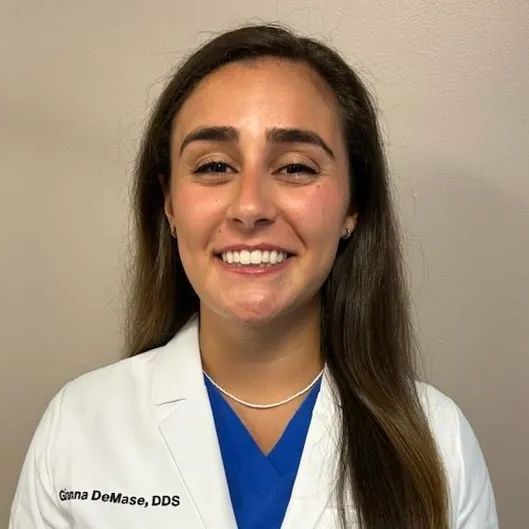
Dr. Gianna DeMase
D.D.S
Dr. DeMase received her undergraduate degree from Binghamton University where she double-majored in Biology and Spanish. She then earned her Doctor of Dental Surgery from New York University College of Dentistry where she graduated with honors in periodontics. After dental school, Dr. DeMase completed a General Practice Residency at Jacobi Medical Center, a level one trauma hospital. Here, she participated in community outreach in the women’s health clinic and taught medical students how to do oral exams. She also worked with special needs patients in Jacobi’s Rose F. Kennedy Center. Dr. DeMase remains committed to being active in the community.
Read More
Dr. DeMase has experience in cavity restoration, endodontics, oral surgery, oral pathology, and prosthodontics including implant restorations.
She highly values patient education and always ensures your comfort and understanding of the treatment. She strongly believes in patient centered care and therefore tailors each treatment plan to you and your needs. As a member of the American Dental Association, Dr. DeMase is always aware of the latest studies and developments in the dental field and strives to apply them to her practice. In her spare time, she can usually be found with a book in her hands.